No Appointment Needed · We Take Insurance · Hablamos Español
Medically Reviewed By: Dr. Jack Norsworthy, D.C. | Doctor of Chiropractic · Personal Injury Specialist · Bear, Delaware
Reviewed: July 2026 | CAIC — 131 Becks Woods Dr, Bear, DE 19701 | (302) 595-2584
Peripheral neuropathy — nerve damage causing pain, burning, numbness, and weakness, most often in the hands and feet — affects more than 25 million Americans. The standard medical answer is often medication: gabapentin or stronger analgesics that reduce pain sensation without treating the underlying nerve damage. At CAIC in Bear, Delaware, we take a different approach.
Our neuropathy treatment program focuses on addressing the root cause of nerve damage through non-invasive, non-pharmaceutical therapies that have demonstrated clinical benefit for neuropathic conditions.
Peripheral neuropathy refers to damage to the peripheral nerves — the nerves carrying signals between the brain, spinal cord, and the rest of the body. When damaged, they misfire — transmitting pain when there should be none, or failing to transmit sensation when there should be.
Regenerative therapy stimulates the body’s natural healing processes to repair damaged nerve tissue. Platelet-rich plasma (PRP) and allogeneic cellular therapy deliver growth factors and healing compounds to affected areas, promoting nerve regeneration and reducing inflammation at the source.
Cold laser stimulates cellular metabolism, reduces inflammatory mediators, and improves blood flow to poorly perfused peripheral tissues. Research supports LLLT as an effective non-pharmaceutical intervention for neuropathic pain, particularly diabetic peripheral neuropathy.
Spinal misalignment compresses nerve roots as they exit the spinal column. Chiropractic adjustments to the lumbar and thoracic spine reduce nerve root compression and can meaningfully improve lower extremity neuropathic symptoms.
Therapeutic exercise improves peripheral circulation, supports nerve health, reduces functional impact of muscle weakness, and improves balance — critically important for neuropathy patients at elevated fall risk.
The majority of neuropathy patients present with foot and lower leg involvement. Burning, numbness, and shooting pain in the feet disrupt sleep, reduce mobility, and significantly affect quality of life. Our foot neuropathy program combines cold laser therapy, regenerative treatment, and lifestyle guidance to address both symptoms and the underlying nerve environment.
Complete the Form Below and We’ll Get Back to you Immediately.
One of the most serious and underappreciated consequences of peripheral neuropathy is the dramatically elevated risk of falls. Neuropathy impairs the proprioceptive signals — the position and movement information — that the feet and legs send to the brain continuously to maintain balance. When these signals are degraded by nerve damage, balance becomes unreliable, particularly on uneven surfaces, in low light, or during rapid movements. Falls in neuropathy patients frequently result in significant injuries — hip fractures, head injuries, and wrist fractures from bracing impact — injuries that are far more serious than the neuropathy itself. At CAIC, fall risk assessment and balance rehabilitation are integral components of the neuropathy care program. We evaluate your balance using objective clinical tests and incorporate progressive balance and proprioceptive training into your treatment plan alongside the nerve-focused therapies.
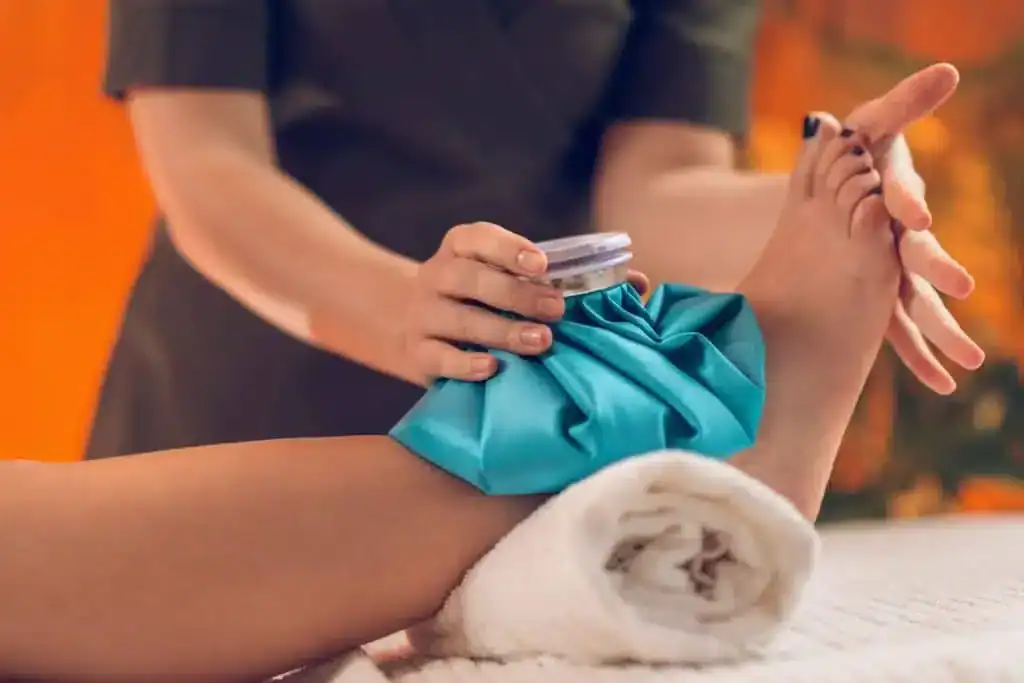
Neuropathic pain characteristically worsens at night — when distraction from daily activity is removed and the nervous system’s pain processing is less suppressed. The result for many neuropathy patients is chronic sleep disruption: difficulty falling asleep, frequent waking from burning or shooting pain, and fatigue that compounds the functional impact of the neuropathy during the day. Poor sleep independently worsens pain perception, creating a cycle in which pain disrupts sleep and sleep disruption amplifies pain. CAIC’s neuropathy treatment program addresses this cycle by targeting the neuroinflammatory and circulatory factors that drive nighttime neuropathic pain — with cold laser therapy, regenerative treatment, and lifestyle guidance aimed at improving the physiological environment for nerve health and sleep quality simultaneously.
Neuropathy treatment at CAIC is genuinely multi-modal. Cold laser stimulates nerve repair at the cellular level. Chiropractic adjustments reduce nerve root compression in the lumbar and thoracic spine. Physical therapy addresses the muscle weakness and balance deficits that accompany advanced neuropathy. Regenerative medicine targets the inflammatory environment that drives nerve damage. One provider, one location, one coordinated program — because neuropathy responds best to multiple simultaneous interventions, not sequential ones.
For patients whose neuropathy developed following a traumatic injury — a workplace accident, a fall, or a compression injury — detailed documentation of the neuropathic condition, its progression, and its response to treatment is critical for workers compensation and personal injury claims. CAIC provides the kind of thorough, objective clinical documentation of neuropathic presentations that supports these claims throughout the legal process.
Patients experiencing neuropathic pain frequently visit the ER during a severe flare — burning, shooting pain that disrupts sleep and function. The ER can rule out acute neurological emergencies, but it is not equipped to manage the underlying peripheral nerve pathology. Chronic neuropathy care — the regenerative treatment, the cold laser, the spinal decompression for nerve root involvement — happens in a setting like CAIC, where the goal is long-term improvement rather than acute stabilization.
Neuropathy symptoms — burning, numbness, tingling, weakness — can be difficult to describe precisely even in your primary language. CAIC’s bilingual team ensures that Spanish-speaking neuropathy patients can articulate their symptoms fully and accurately, leading to better clinical assessment, more targeted treatment, and more complete documentation.
It depends on the cause and duration. Acute neuropathy from a reversible cause can improve substantially or fully resolve. Chronic neuropathy from longstanding conditions may involve some permanent nerve damage — but symptoms can often be meaningfully reduced and progression slowed.
Clinical studies, particularly in diabetic peripheral neuropathy, have demonstrated significant pain reduction and improved sensory function with LLLT. Cold laser is a well-tolerated, evidence-supported non-pharmaceutical approach to managing neuropathic symptoms.
No referral needed. Call (302) 595-2584 to schedule a neuropathy evaluation.
At CAIC, neuropathy patients are never told that medication is the only option. Whether your neuropathy is mild or severe, diabetic or idiopathic, we design a treatment program based on your specific presentation and your goals — with measurable progress tracked at every visit so you always know where you stand in your recovery.
Comprehensive Accident and Injury Center | 131 Becks Woods Dr, Bear, DE 19701