No Appointment Needed · We Take Insurance · Hablamos Español
Medically Reviewed By: Dr. Jack Norsworthy, D.C. | Doctor of Chiropractic · Personal Injury Specialist · Bear, Delaware
Reviewed: July 2026 | CAIC — 131 Becks Woods Dr, Bear, DE 19701 | (302) 595-2584
Tendonitis — inflammation or degeneration of a tendon — is one of the most common musculoskeletal conditions affecting both active people and workers who perform repetitive tasks. Standard medical treatment often begins and ends with rest, NSAIDs, and cortisone injections — a cycle that reduces symptoms temporarily but rarely addresses the underlying tendon pathology.
At CAIC in Bear, Delaware, we treat tendonitis by promoting actual tendon tissue healing through cold laser therapy, targeted manual techniques, and individualized rehabilitation.
LLLT is among the most effective evidence-based treatments for tendinopathy. Photobiomodulation promotes collagen synthesis, reduces inflammatory mediators, and improves the cellular environment for tissue repair.
Specialized instruments identify and treat tendon adhesion, scar tissue, and restricted fascial mobility — breaking up dysfunctional tissue and stimulating a healing response.
Adjacent joint dysfunction frequently contributes to abnormal loading at the tendon. Restoring proper joint mechanics reduces the mechanical stress driving tendon injury.
Progressive tendon loading — eccentric and isometric exercises — stimulates tendon adaptation and collagen remodeling in ways that passive rest and medication cannot replicate.
One of the most frustrating aspects of tendon conditions is their tendency to recur — seeming to heal completely, only to flare again with a return to full activity. This pattern occurs because the tendon adapts structurally during recovery, but the underlying factors that created the abnormal loading — muscle imbalances, joint mechanics, training errors, occupational demands — have not been addressed. At CAIC, tendonitis treatment includes explicit attention to the factors that predispose the tendon to reinjury. Progressive loading protocols are designed to build tendon capacity beyond the demands of your specific activity. Joint mechanics that contribute to tendon overload are corrected through chiropractic care and targeted exercise. Patients receive guidance on the gradual return to full activity — a phased reintroduction that tests the tendon’s capacity before committing to it.
Complete the Form Below and We’ll Get Back to you Immediately.
Tendons are collagen-dense structures, and collagen synthesis is a nutrient-dependent process. Emerging evidence supports the role of specific nutritional factors in supporting tendon healing — most notably vitamin C, which is required for collagen synthesis, adequate protein intake to supply the amino acid building blocks of collagen, and gelatin or collagen hydrolysate consumed before loading exercises to support collagen production in the tendon. At CAIC, Dr. Norsworthy integrates practical nutritional guidance into tendonitis care for patients whose dietary intake may be limiting their healing rate. This is evidence-informed clinical guidance aimed at giving your tendon the biological resources it needs to repair itself.
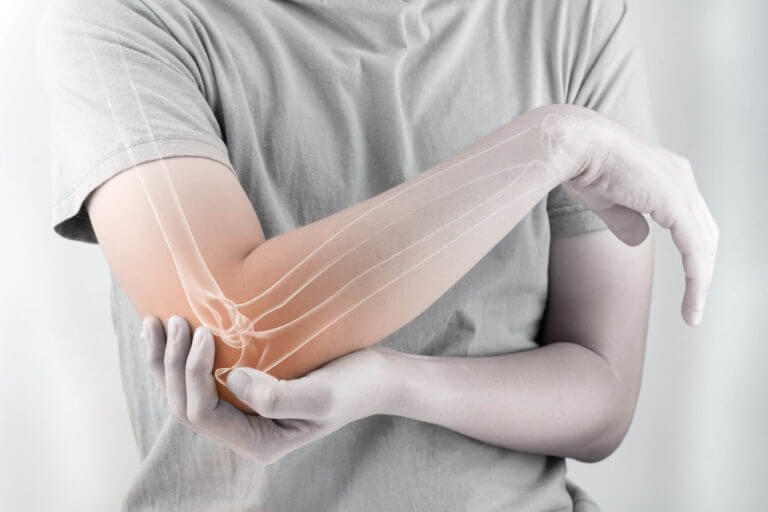
Work-related tendonitis — whether from a single traumatic event or cumulative repetitive strain — is among the most common workers compensation claims in desk, trade, and manufacturing occupations. CAIC provides the complete clinical documentation package that workers comp cases require: mechanism of injury assessment, objective diagnosis, treatment plan with medical necessity justification, progress notes, and return-to-work evaluation. Our documentation is formatted for efficient workers comp insurer review.
Tendinopathy at any location in the body has three overlapping components: the local tissue pathology, the joint mechanics that created the abnormal load, and the muscle function deficit that allowed it. CAIC addresses all three: cold laser for the tissue pathology, chiropractic and joint mobilization for the mechanical component, and therapeutic exercise for the functional component. One coordinated program, one location, one team — not three separate specialist referrals.
Work-related tendonitis treated at CAIC generates the full documentation package required for workers compensation claims: initial injury assessment, diagnosis coding, treatment records, functional capacity documentation, and progress tracking through to resolution or functional plateau. CAIC’s records meet workers comp insurer requirements and are formatted for efficient review by case managers and adjusters.
Tendon injuries treated at the ER or urgent care are typically diagnosed clinically, prescribed NSAIDs, and referred out for follow-up. The actual treatment — the cold laser, the targeted loading program, the soft tissue mobilization that breaks up pathological tendon tissue — doesn’t exist in that setting. CAIC is where tendonitis is actually treated, with the kind of multi-modal approach that produces resolution rather than temporary pain reduction.
Understanding the distinction between rest and active tendon loading — and why your treatment includes exercises rather than just passive therapies — is something every tendonitis patient benefits from understanding clearly. CAIC’s bilingual staff provides this education entirely in Spanish for Spanish-speaking patients, helping them engage meaningfully with a treatment protocol that requires their active participation to work.
Tendonitis is acute tendon inflammation. Tendinosis is chronic degenerative tendon pathology without active inflammation. Many patients diagnosed with tendonitis actually have tendinosis — explaining why anti-inflammatories produce only temporary benefit. CAIC addresses both.
Cortisone may reduce short-term pain but does not treat the underlying pathology and can weaken tendon tissue with repeated use. CAIC provides treatments that promote actual tissue healing.
Acute tendonitis with appropriate treatment can resolve in 3 to 6 weeks. Chronic tendinosis typically requires 8 to 12 weeks of consistent treatment.
Tendon pain in Bear, DE? Call (302) 595-2584 or walk in for same-day care.
Comprehensive Accident and Injury Center | 131 Becks Woods Dr, Bear, DE 19701