Medically Reviewed By: Dr. Jack Norsworthy, D.C. | Doctor of Chiropractic · Personal Injury Specialist · Bear, Delaware
Reviewed: July 2026 | CAIC — 131 Becks Woods Dr, Bear, DE 19701 | (302) 595-2584
Heel pain that is worst with your first steps in the morning, eases slightly with movement but returns after sitting, and has not responded to stretching or inserts — that is the hallmark presentation of plantar fasciitis. It is one of the most common causes of heel pain and one of the most frustrating conditions for patients who receive only generic advice without targeted treatment.
At CAIC in Bear, Delaware, we treat plantar fasciitis by addressing the mechanical and inflammatory drivers of the condition — not just recommending the same stretches you have already tried.
The plantar fascia is a thick band of connective tissue running along the bottom of the foot, connecting the heel bone to the toes. It supports the arch and absorbs mechanical stress of walking and running. Plantar fasciitis occurs when repetitive stress causes micro-tears and inflammation at the calcaneal insertion — where the fascia attaches to the heel.
This is not simply a ‘wear and tear’ condition requiring rest. It is a specific tissue pathology that responds best to targeted mechanical and regenerative treatment.
We evaluate foot mechanics, gait, and lower limb alignment to identify the mechanical contributors to your condition — factors that generic stretching advice never addresses.
Cold laser applied to the plantar fascia and calcaneal attachment promotes collagen synthesis, reduces inflammation, and accelerates tissue repair. Multiple clinical studies support LLLT as an effective intervention for chronic plantar fasciitis.
Precise adjustments to the subtalar joint, midfoot, and ankle restore normal joint mechanics, reduce excessive strain on the plantar fascia, and improve foot function.
Myofascial release and instrument-assisted soft tissue mobilization address the fascial tightness and adhesion formation that stretching cannot reach.
Specific plantar fascia loading, calf eccentric exercise, and intrinsic foot strengthening address the biomechanical imbalances underlying your condition.
The role of footwear in plantar fasciitis is both significant and frequently misunderstood. Patients are often told simply to wear ‘supportive shoes’ — advice that is too vague to be clinically useful. At CAIC, we assess your current footwear as part of the biomechanical evaluation and provide specific guidance on what to look for and what to avoid. In general, footwear for plantar fasciitis patients should provide a firm heel counter, adequate arch support that complements — rather than substitutes for — intrinsic foot muscle function, and a toe box that does not compress the forefoot. We also address the common mistake of transitioning too rapidly to minimalist footwear or barefoot walking before the plantar fascia and intrinsic foot musculature have been adequately conditioned to handle the increased load.
Complete the Form Below and We’ll Get Back to you Immediately.
Not all heel pain is plantar fasciitis, and accurate diagnosis matters because treatment differs significantly between conditions. Other causes of heel pain that present similarly include:
Dr. Norsworthy’s clinical evaluation differentiates plantar fasciitis from these alternative diagnoses and ensures your treatment is targeted to the actual cause of your heel pain — not just the most common one.
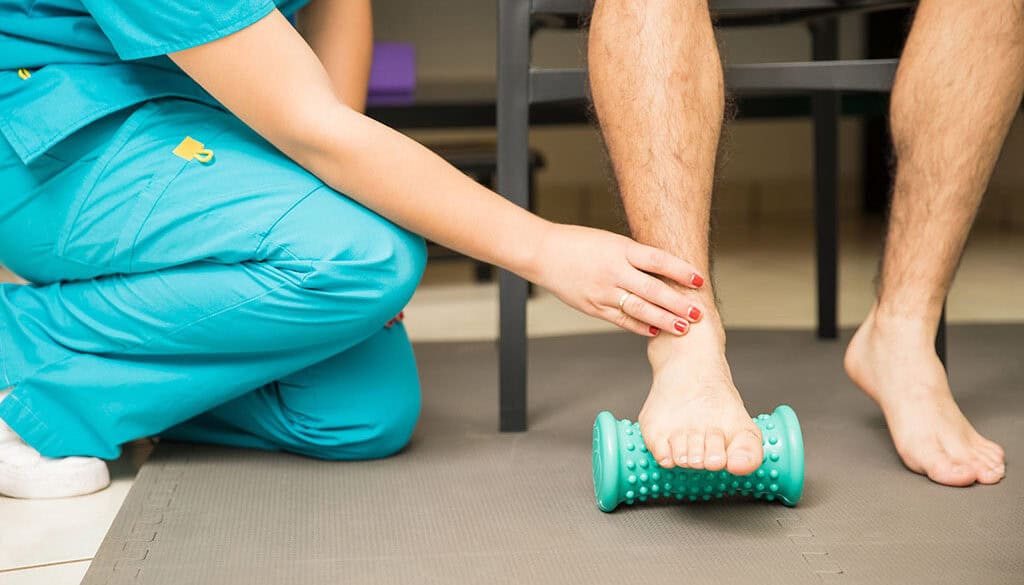
Plantar fasciitis treatment at CAIC involves the foot, the ankle, the calf, and the lower extremity kinetic chain — not just the heel. Cold laser addresses the tissue pathology at the calcaneal insertion. Chiropractic adjustments to the foot and ankle restore joint mechanics that perpetuate plantar fascial strain. Physical therapy rebuilds the intrinsic foot musculature and addresses the calf tightness that loads the fascia excessively. Every element is addressed, by one team, in one location, as a coordinated program.
For patients whose plantar fasciitis developed as a workers compensation injury — from prolonged standing on hard surfaces, from a slip and fall, or from a workplace biomechanical demand — CAIC provides the clinical documentation that supports the occupational cause and the treatment necessity. Complete injury records, functional assessments, and treatment progress notes are maintained with the same precision as all CAIC records, regardless of the patient’s insurance type.
Heel pain severe enough to affect walking sometimes sends patients to urgent care or the ER, where they receive imaging to rule out a stress fracture and are sent home with inserts and stretching instructions. This is where most plantar fasciitis patients’ care ends — and where their frustration begins. CAIC provides what comes after that initial evaluation: targeted treatment of the tissue pathology, biomechanical assessment of the contributing factors, and a structured program designed to resolve the condition rather than simply manage it.
Plantar fasciitis is a condition where patient education matters enormously — understanding why it hurts, what aggravates it, and what the treatment is actually doing makes a meaningful difference in outcomes. CAIC’s bilingual team provides complete education and care guidance in Spanish for Spanish-speaking patients, ensuring they are active and informed participants in their own recovery.
Cortisone can reduce short-term pain but does not treat the underlying tissue pathology. Multiple injections can weaken the plantar fascia and increase rupture risk. CAIC’s approach addresses the condition without these risks.
The vast majority of cases resolve with conservative care. Surgery is reserved for refractory cases failing 6 to 12 months of appropriate non-surgical treatment.
Most patients see significant improvement within 4 to 8 weeks of consistent treatment.
Plantar fasciitis responds best to a comprehensive approach — one that addresses the tissue pathology, the biomechanical contributors, and the patient’s specific daily demands simultaneously. At CAIC, we build that approach for each patient individually, because heel pain with the same name can have meaningfully different underlying causes that require different treatment emphases.
Heel pain in Bear, DE? Call (302) 595-2584 for same-day evaluation.
Comprehensive Accident and Injury Center | 131 Becks Woods Dr, Bear, DE 19701