Yes. A concussion is a traumatic brain injury (TBI), specifically a mild TBI, often written as mTBI. “Mild” describes how the injury looks at the start: a short or no loss of consciousness, brief confusion or memory gaps, and normal brain imaging. It does not mean the injury is minor or that the symptoms will be brief.
The two terms are used interchangeably in medicine, but people are often surprised to see “traumatic brain injury” in their records after what they were told was “just a concussion.” This guide explains how brain injuries are classified, why the mild category can still disrupt daily life, and why consistent wording in your medical record matters. To be evaluated, visit our concussion clinic in Bear, Delaware.
Get Appointment
Complete the Form Below and We’ll Get Back to you Immediately.
Key Takeaways
- Every concussion is a traumatic brain injury; concussion sits in the mild category of TBI.
- TBI severity is graded mild, moderate, or severe based on loss of consciousness, confusion, memory loss, and Glasgow Coma Scale score.
- In a mild TBI, standard brain imaging is normal, which is why a clear CT scan doesn’t rule out a concussion.
- “Mild” refers to the initial presentation. Symptoms can still last weeks or longer and affect work, school, and sleep.
What Is a Traumatic Brain Injury?
A traumatic brain injury is a disruption in how the brain works caused by an outside force: a blow or jolt to the head, or a sudden acceleration and deceleration of the head, like the whiplash motion in a rear-end collision. The brain moves within the skull, and the resulting stress disrupts normal brain function.
At the time of injury, a TBI shows up as at least one of these:
- Any loss of consciousness, or a decreased level of consciousness
- Any loss of memory for events just before or after the injury, called post-traumatic amnesia
- Any change in mental state at the time of injury, such as feeling dazed, confused, disoriented, or slowed down
You don’t have to be knocked out to have a TBI. Most concussions happen without any loss of consciousness.
How Are Traumatic Brain Injuries Classified?
Clinicians grade TBI severity using a handful of measurable criteria. The table below follows the classification in the VA/DoD Clinical Practice Guideline for concussion and mild TBI, which is widely used in civilian care as well:
| Criteria | Mild (concussion) | Moderate | Severe |
|---|---|---|---|
| Structural brain imaging | Normal | Normal or abnormal | Normal or abnormal |
| Loss of consciousness | 0–30 minutes | More than 30 minutes, less than 24 hours | More than 24 hours |
| Altered consciousness or mental state | Up to 24 hours | More than 24 hours | More than 24 hours |
| Post-traumatic amnesia | 0–1 day | More than 1 day, less than 7 days | More than 7 days |
| Glasgow Coma Scale (best in first 24 hours) | 13–15 | 9–12 | Below 9 |
The Glasgow Coma Scale is a 15-point score of how alert and responsive someone is, based on eye opening, speech, and movement. A score of 13 to 15 falls in the mild range. If a person meets criteria for more than one severity level, the higher level applies.

Why “Mild” Doesn’t Mean Minor
The word “mild” causes a lot of misunderstanding. It describes the severity of the injury at the moment it happened, not how much the injury will affect someone’s life afterward.
A person with a mild TBI can have:
- Physical symptoms: headaches, dizziness, nausea, sensitivity to light and noise, blurred vision
- Cognitive symptoms: mental fog, slowed thinking, trouble concentrating, memory problems
- Sleep changes: sleeping more, sleeping less, or trouble falling asleep
- Emotional changes: irritability, anxiety, low mood
Many people recover within a few weeks. Others have symptoms that last much longer, a pattern known as post-concussion syndrome. For someone whose job depends on concentration, or a student facing exams, a “mild” injury can be anything but minor.
Concussion vs. More Severe TBI: What Imaging Shows
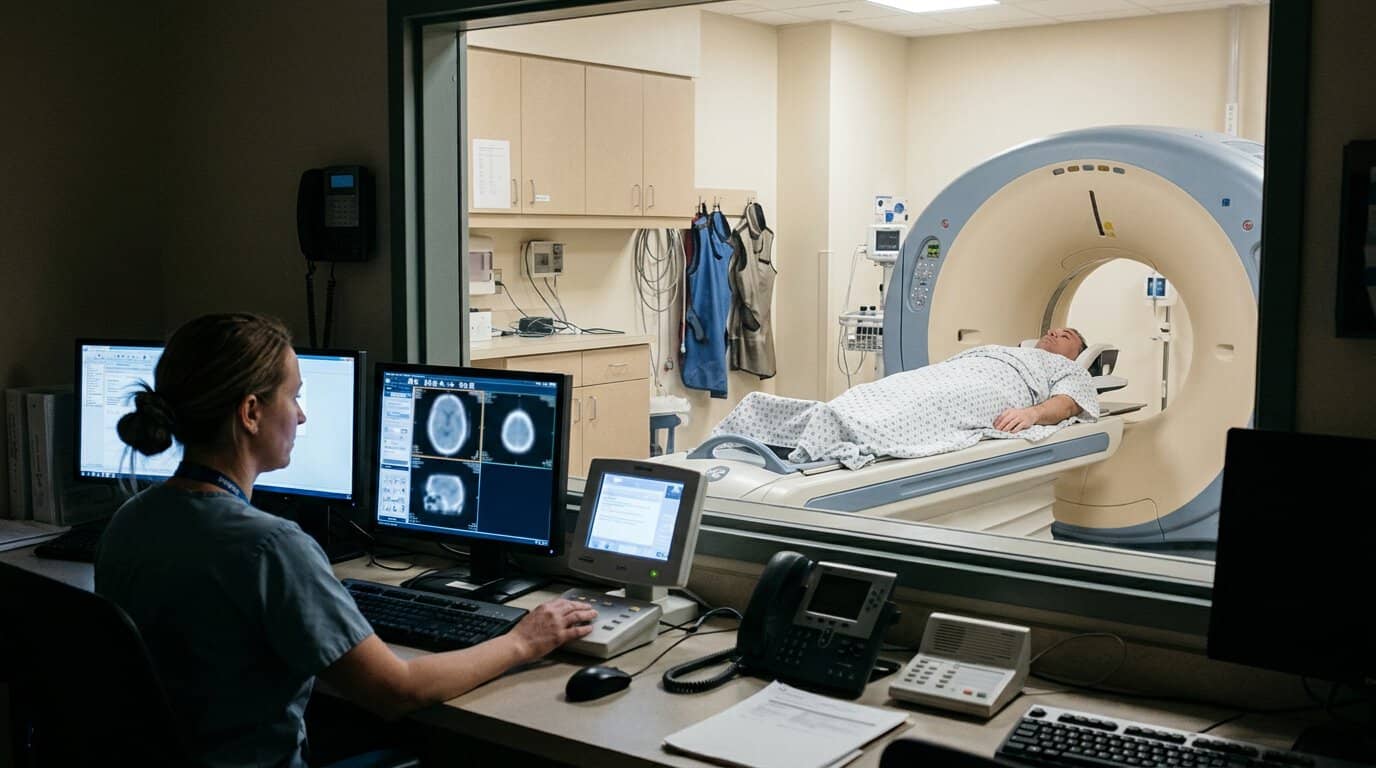
One of the defining features of a mild TBI is that standard brain imaging looks normal. CT scans and routine MRIs are designed to find structural damage such as bleeding, swelling, or fractures. A concussion disrupts how brain cells function without causing that kind of visible damage.
That’s why the emergency room may tell you your scan is clear, and that’s good news, because it rules out a dangerous bleed. But a clear scan doesn’t rule out a concussion. Diagnosing a mild TBI requires a clinical evaluation: a symptom assessment, a neurological exam, balance testing, and eye-movement testing. Our concussion clinic page explains what that evaluation involves.
Moderate and severe TBIs are more likely to show changes on imaging and usually require hospital care. If you see danger signs after a head injury, such as worsening headache, repeated vomiting, increasing confusion, or difficulty waking, don’t wait. See when a head injury is an automatic 911 call.
Why the Wording in Your Medical Record Matters
If your concussion came from a car accident, a fall, or a work injury, your medical records become part of how insurers, and sometimes attorneys, understand what happened to you. The words in those records matter.
A few practical points:
- Consistency counts. If one record says “concussion,” another says “head injury,” and a third never mentions it, it’s harder to show the injury was diagnosed and treated. Clear diagnostic language, used consistently, avoids confusion.
- Objective findings carry weight. Because imaging is normal in a mild TBI, documented findings from symptom scoring, balance testing, and eye-movement exams are what demonstrate the injury.
- The mechanism should be recorded. Notes should explain how the injury happened, such as the type of collision, whether the head struck anything, and when symptoms began.
- Changes over time tell the story. Re-scoring symptoms at each visit shows how the injury is progressing and how long it’s affecting daily life.
Insurers sometimes treat “mild” as a reason to discount an injury. Knowing that a concussion is a recognized traumatic brain injury, documented with objective findings, helps patients understand their own records. For a sense of how brain-injury claims are valued, see our article on the average settlement for a traumatic brain injury.
Concussions From Car Accidents
Car accidents are one of the most common causes of concussion. The head doesn’t have to strike the steering wheel or window; the rapid forward-and-back motion of a collision can be enough. That same motion often strains the neck, so concussion and whiplash frequently happen together. Learn more about whether whiplash can cause a concussion and about head injuries from car crashes.
Symptoms can also be delayed. Adrenaline at the scene masks headache and fogginess, and some people don’t notice that something is wrong until the next day.

When Concussion Symptoms Don’t Go Away
Most people with a mild TBI improve over a few weeks with good management: a short period of rest, then a gradual, symptom-guided return to normal activity. When symptoms persist beyond the expected recovery window, it’s worth a closer look. Lingering problems often come from more than one source. A neck injury, a balance-system problem, or sleep disruption can each keep symptoms going.
Concussion Evaluation in Bear, DE
If you’ve had a head injury and you’re dealing with headaches, fogginess, dizziness, or sleep changes, an evaluation can tell you what’s going on. Our providers assess concussion without relying on imaging alone, treat the neck injuries that often come with it, and document every finding.
Call (302) 595-2584 or walk in to our clinic at 131 Becks Woods Dr, Bear, DE 19701, Monday through Thursday, 9:00 AM to 6:00 PM. We see patients from Bear, Newark, Wilmington, Middletown, and New Castle, Delaware.
Frequently Asked Questions
A concussion is a brain injury that disrupts how brain cells work, but it doesn’t usually cause structural damage that shows on standard imaging. Most people recover fully with proper care. Symptoms that last longer than expected should be evaluated, because they can affect daily life even when scans are normal.
Usually not on a standard MRI or CT scan. Normal structural imaging is one of the defining features of a mild TBI. That’s why concussion is diagnosed through a clinical evaluation of symptoms, neurological function, balance, and eye movement rather than imaging alone.
It can be. Concussion is classified as a mild traumatic brain injury, but “mild” describes the initial presentation, not the impact on your life. Symptoms like headaches, fogginess, and sleep changes can last weeks or longer. Any head injury with danger signs needs emergency care.
A concussion is a type of TBI. Traumatic brain injury is the broad category, graded mild, moderate, or severe. Concussion is another name for a mild TBI, the most common kind, in which loss of consciousness lasts 30 minutes or less, if it happens at all.

Comprehensive Accident and Injury Center